Australia Premium Research Peptides. Lab-Verified.
PepDaddy delivers ≥98% HPLC-verified research peptides to Melbourne with fast, compliant delivery. Precision compounds for serious research.
Most Popular
PepDaddy Popular Products
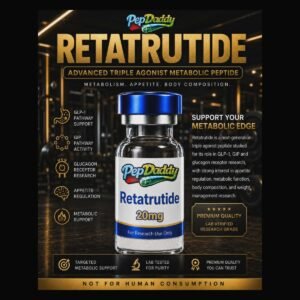
Retatrutide – (20mg)

Retatrutide 60mg

NAD+ (1000mg)

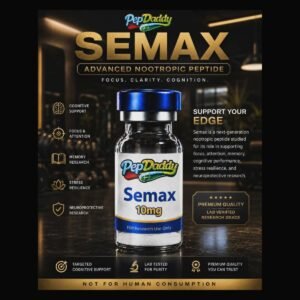
Semax 10mg

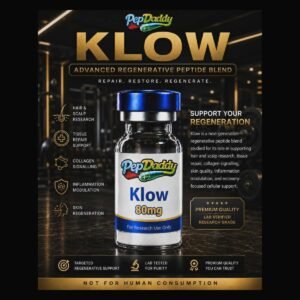
KLOW 80

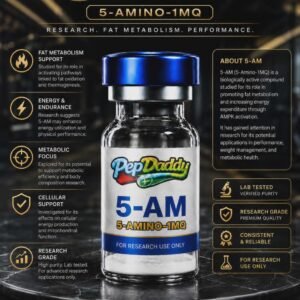
5-AM (5-Amino-1MQ) Research Compound

Selank (10mg)

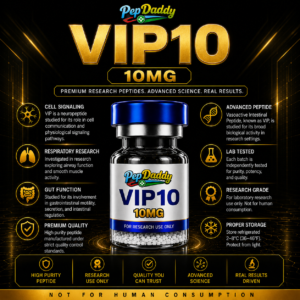
VIP10 (10mg)
Advanced Research Reconstitution Calculator
Select a product and the calculator automatically locks the correct vial amount and measurement type: mcg, mg, or IU. You can still enter a custom measurement amount for the syringe preview.
Custom mass-based setup. Confirm vial amount and diluent before calculating.
Selected amount is above the visible capacity of this syringe size. The visual is capped at the maximum syringe volume.
U-100 preview uses: draw mL = selected measurement ÷ concentration, syringe units = draw mL × 100. IU products calculate in IU only. Topical/accessory products disable syringe output.
Research Product Guide Cards With Visuals
Search, filter, and quick-load vial amounts into the calculator. Each card now includes a visual product illustration, original practical guide ranges, new research dosage comparisons, and evidence labels such as validated regimen, indirect/pragmatic cycle, or no established human cycle. Not medical advice.
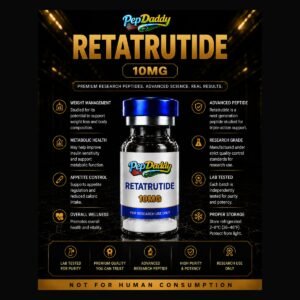
Retatrutide
10mgTriple agonist research compound for GLP-1, GIP, and glucagon receptor pathway studies.
- Original guide dosage
- Original guide range: start 0.5-1 mg/week, titrate gradually toward 4-12 mg/week where research protocols support it.
- Original frequency
- Weekly injection
- Original cycle
- 12-48+ weeks with gradual titration
- Updated evidence review
- Updated literature range: peer-reviewed human studies report once-weekly SC retatrutide arms from 0.5 mg to 12 mg, with 2026 top-line phase 3 obesity reporting 4 mg, 9 mg, and 12 mg weekly over 80 weeks. Public guide wording should not present this as a self-use instruction.
- New vs old dosage comparison
- Old guide: start 0.5 to 1 mg/week and titrate toward 4 to 12 mg/week. New research check: old range broadly aligns, but add the documented 0.5 mg study arm and the 9 mg phase 3 target dose as research-study arms.
- Route / format
- SC in clinical development reporting
- Frequency
- Once weekly in late-stage obesity development
- Cycle logic
- Long continuous treatment windows, 24 to 80 plus weeks in reported development, not short cycles
- Why this cycle label
- Efficacy and tolerability were measured over months with dose escalation to reduce gastrointestinal adverse effects.
- How to read both ranges
- Kept from the previous guide. The updated review confirms the stronger evidence is long, continuous weekly escalation rather than short cycles.
- Evidence level
- Randomized phase 2 and phase 3 reporting
- Monitoring / safety notes
- GI tolerance, hydration, weight trajectory, glucose context, gallbladder or pancreatitis-class symptoms. Nausea, vomiting, diarrhea, constipation, appetite suppression, dehydration risk, and class-style gallbladder or pancreatitis concerns.
- COA check
- Verify salt form, purity, and identity against batch COA.
- Storage
- Store according to product label, COA, and laboratory SOPs
Retatrutide
20mgHigher-capacity triple agonist research compound for metabolic signalling and documentation workflows.
- Original guide dosage
- Original guide range: start 0.5-1 mg/week, titrate gradually toward 4-12 mg/week where research protocols support it.
- Original frequency
- Weekly injection
- Original cycle
- 12-48+ weeks with gradual titration
- Updated evidence review
- Updated literature range: 0.5 mg, 4 mg, 8 mg, and 12 mg once weekly appear in peer-reviewed human arms; 2026 top-line phase 3 obesity reporting also describes 4 mg, 9 mg, and 12 mg weekly over 80 weeks.
- New vs old dosage comparison
- Old guide: start 0.5 to 1 mg/week and titrate toward 4 to 12 mg/week. New research check: keep the old range, add 0.5 mg as a documented study arm and 9 mg as a newly reported phase 3 target arm.
- Route / format
- SC in clinical development reporting
- Frequency
- Once weekly
- Cycle logic
- 24 to 80 plus week evidence windows, not a short pulse cycle
- Why this cycle label
- Long metabolic endpoints and dose-related gastrointestinal tolerability require staged escalation.
- How to read both ranges
- Same practical guide range as the 10mg size, with the updated evidence label shown separately.
- Evidence level
- Randomized phase 2 and phase 3 reporting
- Monitoring / safety notes
- GI tolerance, hydration, weight trajectory, glucose context, gallbladder or pancreatitis-class symptoms. Dose-related gastrointestinal effects are the main tolerability concern.
- COA check
- Same evidence base as Retatrutide 10mg. Verify batch COA.
- Storage
- Store according to product label, COA, and laboratory SOPs
Retatrutide
60mgExtended-capacity triple agonist research vial for longer research documentation timelines.
- Original guide dosage
- Original guide range: start 0.5-1 mg/week, titrate gradually toward 4-12 mg/week where research protocols support it.
- Original frequency
- Weekly injection
- Original cycle
- 12-48+ weeks with gradual titration
- Updated evidence review
- Updated literature range: 0.5 mg, 4 mg, 8 mg, and 12 mg once weekly appear in peer-reviewed human arms; 2026 top-line phase 3 obesity reporting also describes 4 mg, 9 mg, and 12 mg weekly over 80 weeks.
- New vs old dosage comparison
- Old guide: start 0.5 to 1 mg/week and titrate toward 4 to 12 mg/week. New research check: keep the old range, add 0.5 mg as a documented study arm and 9 mg as a newly reported phase 3 target arm.
- Route / format
- SC in clinical development reporting
- Frequency
- Once weekly
- Cycle logic
- 24 to 80 plus week evidence windows, not a short pulse cycle
- Why this cycle label
- Long continuous treatment matches the clinical development model.
- How to read both ranges
- Same practical guide range as the smaller sizes, with higher vial capacity for longer research timelines.
- Evidence level
- Randomized phase 2 and phase 3 reporting
- Monitoring / safety notes
- GI tolerance, hydration, weight trajectory, glucose context, gallbladder or pancreatitis-class symptoms. Dose-related gastrointestinal effects are the main tolerability concern.
- COA check
- Same evidence base as smaller Retatrutide catalogue sizes. Verify batch COA.
- Storage
- Store according to product label, COA, and laboratory SOPs
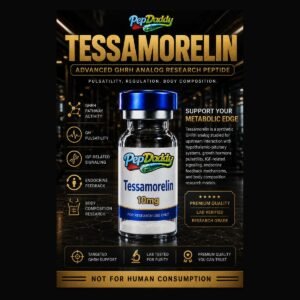
Tesamorelin
10mgGHRH analogue research material used in growth hormone axis and visceral adiposity pathway studies.
- Original guide dosage
- Original guide range: 1-2 mg/day.
- Original frequency
- Daily or 5 days on / 2 days off
- Original cycle
- 8-12 weeks on, with breaks
- Updated evidence review
- Approved EGRIFTA WR formulation: 1.28 mg SC once daily.
- New vs old dosage comparison
- No new dosage change added beyond the previous evidence review. Keep the original guide range visible and use the evidence section to explain uncertainty.
- Route / format
- SC
- Frequency
- Daily
- Cycle logic
- Continuous treatment with reassessment; evidence supports 26 weeks and longer with monitoring
- Why this cycle label
- The evidence base is ongoing daily treatment, not bodybuilding-style short cycling.
- How to read both ranges
- Kept as historical guide context. Updated evidence highlights 1.28 mg SC once daily for current EGRIFTA WR formulation with monitoring.
- Evidence level
- Official prescribing information
- Monitoring / safety notes
- IGF-1, fasting glucose or HbA1c, malignancy history, injection-site tolerance. Arthralgia, edema, myalgia, injection-site reactions, glucose intolerance; contraindications include active malignancy and pregnancy.
- COA check
- Verify exact formulation because approved EGRIFTA WR dosing is formulation-specific.
- Storage
- Store according to product label, COA, and laboratory SOPs
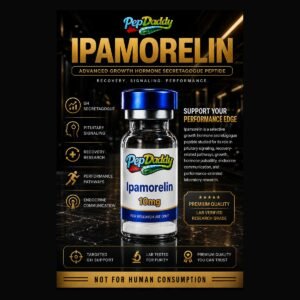
Ipamorelin
10mgSelective GH secretagogue research material used in receptor interaction and endocrine signalling studies.
- Original guide dosage
- Original guide range: 100-300 mcg, 1-2x/day.
- Original frequency
- 5-7 days/week, often pre-bed or AM/PM
- Original cycle
- 8 weeks on, 4-8 weeks off
- Updated evidence review
- No validated chronic human wellness dose established.
- New vs old dosage comparison
- No new dosage change added beyond the previous evidence review. Keep the original guide range visible and use the evidence section to explain uncertainty.
- Route / format
- IV or SC in small human studies
- Frequency
- Chronic retail-vial frequency is not evidence-based
- Cycle logic
- No validated chronic retail cycle
- Why this cycle label
- Available human data do not validate long wellness or physique cycles.
- How to read both ranges
- Kept as previous practical guide context. Updated evidence flags no validated chronic wellness dose.
- Evidence level
- Small human studies; low to moderate evidence for acute endocrine response
- Monitoring / safety notes
- GH-axis exposure, IGF-1, glucose context, edema, headache, appetite changes. Potential GH-axis overexposure, edema, headache, increased appetite.
- COA check
- Published human evidence is mainly acute GH-challenge and PK-PD work.
- Storage
- Store according to product label, COA, and laboratory SOPs
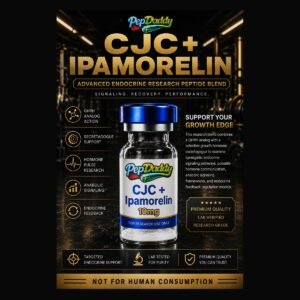
CJC + Ipamorelin
10mgCombined GHRH/GHRP research blend for pulse signalling and receptor interaction models.
- Original guide dosage
- Original guide range: 100-300 mcg each, 1-2x/day.
- Original frequency
- 5-7 days/week
- Original cycle
- 8 weeks on / 4-8 weeks off
- Updated evidence review
- Uncertain. Exact commercial blend and CJC variant are not directly validated by standalone literature.
- New vs old dosage comparison
- No new dosage change added beyond the previous evidence review. Keep the original guide range visible and use the evidence section to explain uncertainty.
- Route / format
- Usually SC in research-vial context
- Frequency
- Formulation dependent
- Cycle logic
- Uncertain; depends on CJC variant and ratio
- Why this cycle label
- DAC-containing CJC favors longer spacing; no-DAC/mod-GRF theory favors pulsatile use. The blend itself lacks direct validation.
- How to read both ranges
- Kept as previous guide context. Updated evidence notes uncertainty depends on the exact CJC variant and blend ratio.
- Evidence level
- Indirect evidence only
- Monitoring / safety notes
- IGF-1, glucose context, edema, headache, appetite, formulation verification. GH-axis related adverse effects and blend uncertainty.
- COA check
- Guide must confirm whether CJC component is DAC or no-DAC and verify ratio.
- Storage
- Store according to product label, COA, and laboratory SOPs
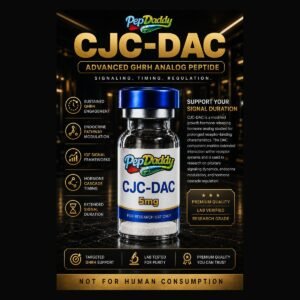
CJC-DAC
5mgLong-acting GHRH analogue with DAC modification for extended signalling research.
- Original guide dosage
- Original guide range: 1-2 mg once or twice weekly.
- Original frequency
- 1-2x/week
- Original cycle
- 8-12 weeks
- Updated evidence review
- Weight-based weekly SC dosing was studied; no validated fixed retail-vial regimen.
- New vs old dosage comparison
- No new dosage change added beyond the previous evidence review. Keep the original guide range visible and use the evidence section to explain uncertainty.
- Route / format
- SC
- Frequency
- Weekly or longer interval fits long half-life
- Cycle logic
- Small-study endocrine use only; no validated retail cycle
- Why this cycle label
- DAC pharmacology supports infrequent dosing rather than repeated daily pulses.
- How to read both ranges
- Kept as practical guide context. Updated evidence notes no validated fixed retail-vial regimen.
- Evidence level
- Small human endocrine studies
- Monitoring / safety notes
- IGF-1, glucose context, fluid retention, endocrine response. GH-axis related effects and long-acting exposure uncertainty.
- COA check
- Verify DAC modification, exact sequence, and batch purity.
- Storage
- Store according to product label, COA, and laboratory SOPs
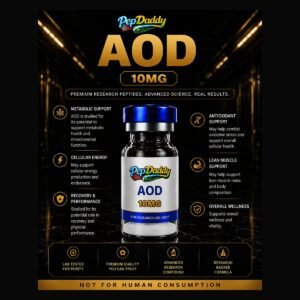
AOD-9604
10mghGH fragment research material studied for lipolysis and metabolic pathway signalling.
- Original guide dosage
- Original guide range: 250-500 mcg daily.
- Original frequency
- 5 days on / 2 days off
- Original cycle
- 8 weeks
- Updated evidence review
- Daily dosing was studied, but no durable evidence-based practical dose range is established from this review.
- New vs old dosage comparison
- No new dosage change added beyond the previous evidence review. Keep the original guide range visible and use the evidence section to explain uncertainty.
- Route / format
- Varied in development; SC in retail-vial context is not a validated rule
- Frequency
- Daily exposure was studied historically
- Cycle logic
- Human obesity trials ran 12 to 24 weeks; efficacy was limited and development halted
- Why this cycle label
- Existing trials do not support confident practical recommendation.
- How to read both ranges
- Kept as historical guide context. Updated review says human trial evidence is weak for a confident recommendation.
- Evidence level
- Human trials existed, but weak practical evidence
- Monitoring / safety notes
- Metabolic markers, study endpoint response, product identity. Do not present as established weight-loss protocol.
- COA check
- Commonly identified as hGH 176-191 fragment. Verify sequence against COA.
- Storage
- Store according to product label, COA, and laboratory SOPs
BPC-157
10mgBody Protection Compound research material used in tissue, tendon, ligament, and gut barrier models.
- Original guide dosage
- Original guide range: 250-500 mcg daily.
- Original frequency
- Daily
- Original cycle
- 4-8 weeks
- Updated evidence review
- No validated human dose established. New literature check found animal PK ranges only: 20 micrograms/kg IV; 20, 100, or 500 micrograms/kg IM; and repeated 100 micrograms/kg IM for 7 days in rats/dogs.
- New vs old dosage comparison
- Old guide: 250 to 500 mcg daily. New research check: do not replace the old practical range with animal microgram/kg data because it is not a validated human regimen. Show it as preclinical context only.
- Route / format
- Experimental SC or oral marketed routes are not clinically validated; animal PK used IV/IM
- Frequency
- No validated human frequency
- Cycle logic
- Grey-market 2 to 6 week cycles are not clinical standards
- Why this cycle label
- Popularity comes mainly from animal and mechanistic literature, not validated human dosing.
- How to read both ranges
- Kept as common practical guide range. Updated evidence says no validated human dose is established.
- Evidence level
- Mostly animal data; very limited human evidence
- Monitoring / safety notes
- Product quality, sterility, injection reaction, study endpoint documentation. Product-quality uncertainty, injection reactions, and theoretical tissue-growth/angiogenic signaling concerns.
- COA check
- Pentadecapeptide reference material; verify CAS and sequence against batch COA.
- Storage
- Store according to product label, COA, and laboratory SOPs
TB-500
10mgThymosin beta research peptide used in systemic tissue repair and mobility models.
- Original guide dosage
- Original guide range: 2-5 mg weekly.
- Original frequency
- 1-2 injections weekly
- Original cycle
- 4-8 weeks
- Updated evidence review
- No validated human dose established for TB-500 itself.
- New vs old dosage comparison
- No new dosage change added beyond the previous evidence review. Keep the original guide range visible and use the evidence section to explain uncertainty.
- Route / format
- Experimental SC in retail-vial context
- Frequency
- No validated frequency
- Cycle logic
- 4 to 8 week cycles are anecdotal only
- Why this cycle label
- Direct human therapeutic evidence for TB-500 itself is extremely weak.
- How to read both ranges
- Kept as common practical guide range. Updated evidence says TB-500-specific human evidence is extremely weak.
- Evidence level
- Extremely weak direct human evidence
- Monitoring / safety notes
- Product quality, sterility, injection reaction, study endpoint documentation. Product-quality uncertainty and injection reaction risk.
- COA check
- Verify fragment identity and purity against COA.
- Storage
- Store according to product label, COA, and laboratory SOPs
Wolverine BPC + TB
20mgResearch blend combining BPC-157 and TB-500 for recovery pathway studies.
- Original guide dosage
- Original guide range: 250-500 mcg each, total 500-1000 mcg daily.
- Original frequency
- Daily
- Original cycle
- 4-8 weeks
- Updated evidence review
- No validated fixed-blend human dose. New literature check reinforces that BPC-157 component data is preclinical/animal and not directly translatable to a blend dose.
- New vs old dosage comparison
- Old guide: 250 to 500 mcg each, total 500 to 1000 mcg daily. New research check: no direct blend study confirms that range; keep it as old guide context only.
- Route / format
- Usually SC if used as an injectable blend
- Frequency
- Varies; no validated frequency
- Cycle logic
- 4 to 8 week pragmatic cycle only, not clinical standard
- Why this cycle label
- Tissue remodeling is multi-week, but the exact fixed blend lacks direct clinical validation.
- How to read both ranges
- Kept as previous blend guide context. Updated evidence says fixed-blend human dosing is not validated.
- Evidence level
- Indirect component evidence only
- Monitoring / safety notes
- Local reaction, product quality/sterility, symptom or model endpoint change. Blend-specific long-term safety uncertain.
- COA check
- Blend component ratio must be verified against supplied documentation.
- Storage
- Store according to product label, COA, and laboratory SOPs
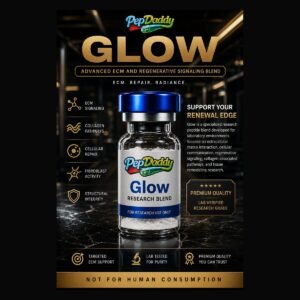
GLOW
70mgResearch blend combining BPC-157, TB-500, and GHK-Cu for tissue and extracellular matrix studies.
- Original guide dosage
- Original guide range: 2-5 mg total blend/day.
- Original frequency
- Daily or 5 days on / 2 days off
- Original cycle
- 4-8 weeks
- Updated evidence review
- No validated fixed-blend human dose established. New literature check adds that BPC-157 is preclinical-dominant and GHK-Cu data is mostly in vitro/topical animal work.
- New vs old dosage comparison
- Old guide: 2 to 5 mg total blend/day. New research check: no fixed-blend human dose was established; keep old range only as historical guide context.
- Route / format
- Usually SC if used as injectable blend
- Frequency
- Varies; no validated frequency
- Cycle logic
- Pragmatic 4 to 8 weeks only
- Why this cycle label
- Multi-week tissue-remodeling rationale exists, but the fixed blend lacks direct clinical validation.
- How to read both ranges
- Kept as previous blend guide context. Updated evidence says no validated fixed-blend human dose.
- Evidence level
- Indirect component evidence only
- Monitoring / safety notes
- Local reaction, symptom change, product quality and sterility. Injection reactions and blend-specific long-term safety uncertainty.
- COA check
- Blend component amounts must be verified against product label and COA.
- Storage
- Store according to product label, COA, and laboratory SOPs
KLOW
80mgAdvanced research blend combining GHK-Cu, BPC-157, TB-500, and KPV.
- Original guide dosage
- Original guide range: 2-5 mg total blend/day.
- Original frequency
- 5 days on / 2 days off
- Original cycle
- 8 weeks
- Updated evidence review
- No validated fixed-blend human dose. New literature check reinforces that GHK-Cu, BPC-157, and KPV component evidence does not validate this fixed blend as a human dose protocol.
- New vs old dosage comparison
- Old guide: 2 to 5 mg total blend/day. New research check: no direct KLOW fixed-blend regimen established; keep old range as historical guide context only.
- Route / format
- Formulation dependent
- Frequency
- Varies; no validated frequency
- Cycle logic
- 4 to 8 week heuristic only, not validated
- Why this cycle label
- Component biology is plausible, but the fixed blend has no direct clinical validation.
- How to read both ranges
- Kept as previous blend guide context. Updated evidence says no validated fixed-blend human dose.
- Evidence level
- Indirect component evidence only
- Monitoring / safety notes
- Local reaction, irritation, product quality, sterility, endpoint documentation. Blend-specific long-term safety uncertain.
- COA check
- Blend component amounts must be verified against product label and COA.
- Storage
- Store according to product label, COA, and laboratory SOPs
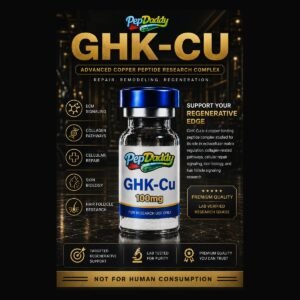
GHK-Cu
100mgCopper tripeptide research material used in collagen, skin matrix, and repair pathway studies.
- Original guide dosage
- Original guide range: 1-2 mg daily by research route or topical format.
- Original frequency
- Daily
- Original cycle
- 4-8 weeks
- Updated evidence review
- Updated literature check: accessible GHK-Cu data is mainly picomolar-to-nanomolar in vitro activity plus daily topical animal wound work over 13 days. No robust therapeutic human dose-finding range was recovered.
- New vs old dosage comparison
- Old guide: 1 to 2 mg daily by research route or topical format. New research check: keep the old guide as historical/practical context only; the new evidence does not validate a universal mg dose and points to concentration-dependent topical research.
- Route / format
- Topical evidence is stronger than injectable evidence
- Frequency
- Topical once or twice daily in cosmetic practice, formulation dependent
- Cycle logic
- Continuous topical use as tolerated; exact strength must be confirmed
- Why this cycle label
- Topical studies use repeated local application rather than finite injection cycles.
- How to read both ranges
- Kept as previous guide context. Updated evidence is strongest for topical concentration-dependent use, not a universal mg application standard.
- Evidence level
- Small controlled topical studies / cosmeceutical evidence
- Monitoring / safety notes
- Skin tolerance, irritation, pigmentary changes, catalogue concentration. Irritation, sensitivity, possible pigmentary changes.
- COA check
- Copper-binding tripeptide; verify exact molecular data against COA.
- Storage
- Store according to product label, COA, and laboratory SOPs
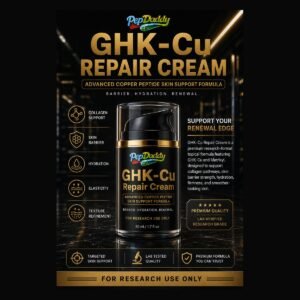
GHK-Cu Repair Cream
TopicalTopical copper peptide cream positioned around skin barrier support, collagen signalling, and visible skin-quality research workflows.
- Original guide dosage
- Practical topical reference range: apply a thin, even layer 1-2x daily.
- Original frequency
- Once or twice daily
- Original cycle
- 4-12 week observation window or ongoing as tolerated
- Updated evidence review
- Concentration-dependent topical application. Exact strength should be confirmed from the live product specification.
- New vs old dosage comparison
- Practical topical reference kept: thin, even layer 1 to 2 times daily, with a 4 to 12 week observation window or ongoing as tolerated.
- Route / format
- Topical
- Frequency
- Usually once or twice daily in topical product research or cosmetic practice
- Cycle logic
- 4 to 12 week topical observation window, or ongoing as tolerated
- Why this cycle label
- Barrier repair and collagen remodelling are gradual, so repeated application across weeks is the relevant observation model.
- How to read both ranges
- Added from the image-based usage guide so the topical product keeps its practical reference wording alongside the research review.
- Evidence level
- Topical / cosmeceutical evidence, not injectable dose evidence
- Monitoring / safety notes
- Skin tolerance, irritation, sensitivity, and visible skin-response documentation. Avoid broken-skin use unless specifically studied. Monitor irritation.
- COA check
- Confirm exact cream size, concentration, and batch specification from the live catalogue.
- Storage
- Store according to product label, COA, and laboratory SOPs
Hair Regrowth Serum
TopicalTopical GHK-Cu style scalp serum positioned around follicle-environment support, scalp quality, and hair-support research themes.
- Original guide dosage
- Practical topical reference range: apply to scalp once or twice daily.
- Original frequency
- Once or twice daily
- Original cycle
- 8-16+ weeks because hair-cycle outcomes are slow
- Updated evidence review
- Concentration-dependent topical application. No validated universal mg dose.
- New vs old dosage comparison
- Practical topical reference kept: apply to scalp once or twice daily; assess over 8 to 16 plus weeks because hair-cycle outcomes are slow.
- Route / format
- Topical
- Frequency
- Usually once or twice daily in topical scalp routines
- Cycle logic
- 8 to 16 plus week observation window for hair or scalp outcomes
- Why this cycle label
- Hair-cycle biology is slow, so short trials are unlikely to show meaningful changes.
- How to read both ranges
- Added from the image-based usage guide so scalp and follicle-support workflows are not missed.
- Evidence level
- Low to moderate topical rationale; hair-specific evidence is weaker than skin evidence
- Monitoring / safety notes
- Scalp irritation, dryness, sensitivity, and visible hair or scalp response. Monitor scalp irritation, dryness, and sensitivity.
- COA check
- Confirm exact serum concentration and application specification from the live catalogue.
- Storage
- Store according to product label, COA, and laboratory SOPs
KPV
10mgAlpha-MSH derived tripeptide research material used in inflammation and gut barrier models.
- Original guide dosage
- Original guide range: 250-500 mcg daily.
- Original frequency
- 5 days on / 2 days off
- Original cycle
- 8 weeks
- Updated evidence review
- No validated systemic human dose established.
- New vs old dosage comparison
- No new dosage change added beyond the previous evidence review. Keep the original guide range visible and use the evidence section to explain uncertainty.
- Route / format
- Experimental topical, oral, or SC routes discussed
- Frequency
- No validated frequency
- Cycle logic
- Any 2 to 8 week cycle is extrapolative
- Why this cycle label
- Mechanistic and preclinical evidence does not establish a human dosing protocol.
- How to read both ranges
- Kept as previous guide context. Updated evidence says no validated systemic human dose.
- Evidence level
- Mostly preclinical / mechanistic evidence
- Monitoring / safety notes
- Study endpoints, irritation or local reaction, product identity. Human systemic safety and dose standardization are not established.
- COA check
- Tripeptide sequence Lys-Pro-Val; verify molecular data against COA.
- Storage
- Store according to product label, COA, and laboratory SOPs
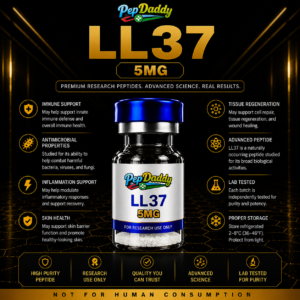
LL-37
5mgAntimicrobial peptide research material used in immune modulation and tissue repair studies.
- Original guide dosage
- Original guide range: 100-500 mcg daily.
- Original frequency
- Daily
- Original cycle
- 2-6 weeks
- Updated evidence review
- No validated systemic human dose established.
- New vs old dosage comparison
- No new dosage change added beyond the previous evidence review. Keep the original guide range visible and use the evidence section to explain uncertainty.
- Route / format
- Experimental local, topical, or injectable routes
- Frequency
- No validated frequency
- Cycle logic
- No validated cycle
- Why this cycle label
- Clinical translation is constrained by bioavailability, stability, and formulation issues.
- How to read both ranges
- Kept as previous guide context. Updated evidence says no validated systemic human dose.
- Evidence level
- Mechanistic and preclinical emphasis; human dosing absent
- Monitoring / safety notes
- Local reaction, immune/inflammatory response markers, product identity. Systemic human dosing and safety remain under-standardized.
- COA check
- Verify exact synthetic fragment and purity against COA.
- Storage
- Store according to product label, COA, and laboratory SOPs
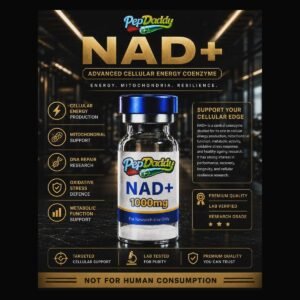
NAD+
1000mgNicotinamide adenine dinucleotide research material used in mitochondrial, redox, and cellular energy studies.
- Original guide dosage
- Original guide range: 50-100 mg daily or 2-3x/week; slow IV protocols vary.
- Original frequency
- 2-5x/week, start low in research documentation
- Original cycle
- As needed, often ongoing low-dose in clinic-style protocols
- Updated evidence review
- No validated injectable human dose range established in this review.
- New vs old dosage comparison
- No new dosage change added beyond the previous evidence review. Keep the original guide range visible and use the evidence section to explain uncertainty.
- Route / format
- IV most often in clinics; IM/SC less standardized
- Frequency
- No validated cycle standard
- Cycle logic
- Clinic protocols vary widely and are not well anchored by high-quality dose-response trials
- Why this cycle label
- Strong biochemistry does not equal standardized injectable dose evidence.
- How to read both ranges
- Kept as previous guide context. Updated evidence says injectable NAD+ dosing lacks standardization.
- Evidence level
- Low evidence for injectable NAD+; stronger biology than dosing data
- Monitoring / safety notes
- Infusion rate tolerance, flushing, nausea, chest/abdominal pressure, documentation of protocol. Flushing, nausea, chest or abdominal pressure, and rate-related discomfort in infusion settings.
- COA check
- CAS 53-84-9. Molecular formula C21H27N7O14P2. Molecular weight approx. 663.43 g/mol.
- Storage
- Store according to product label, COA, and laboratory SOPs
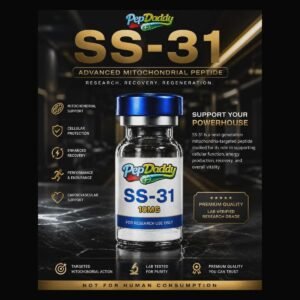
SS-31
50mgMitochondrial-targeting peptide research material used in oxidative stress and cellular protection studies.
- Original guide dosage
- Original guide range: 500-1000 mcg daily.
- Original frequency
- Daily or 5 days on / 2 days off
- Original cycle
- 8 weeks
- Updated evidence review
- Updated literature check for elamipretide/SS-31: FDA-labeled Forzinity regimen is 40 mg SC once daily in Barth syndrome patients weighing at least 30 kg, with 20 mg SC once daily in adults with severe renal impairment not on dialysis. This is indication-specific and not a universal retail-vial rule.
- New vs old dosage comparison
- Old guide: 500 to 1000 mcg daily. New research check: the official elamipretide label is mg-scale and far higher, but it is disease-label specific. Keep the old guide visible as historical context and flag the official 40 mg/20 mg data separately.
- Route / format
- SC in FDA-labeled Barth syndrome product; IV used in some interaction studies
- Frequency
- Once daily in FDA label; other protocols are indication dependent
- Cycle logic
- Structured medical protocols, often weeks to months
- Why this cycle label
- Formal development uses indication-specific protocols rather than casual short stacks.
- How to read both ranges
- Kept as previous guide context. Updated evidence says formal regimens are indication-specific mg-scale protocols.
- Evidence level
- Clinical development exists; exact regimen depends on indication
- Monitoring / safety notes
- Condition-specific protocol verification, local reactions, study endpoint markers. Injection-site reactions and protocol-specific adverse events.
- COA check
- Also known as elamipretide in literature. Verify batch data against COA.
- Storage
- Store according to product label, COA, and laboratory SOPs
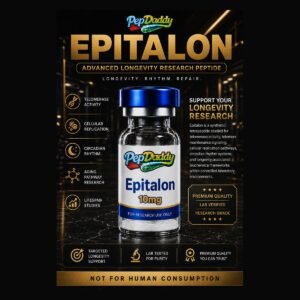
Epitalon
10mgTetrapeptide research material studied in telomerase and cellular ageing models.
- Original guide dosage
- Original guide range: 1-5 mg daily, with some protocols up to 10 mg.
- Original frequency
- Daily for 10-20 days
- Original cycle
- Repeat 2-3x/year
- Updated evidence review
- No globally validated human dose established in accessible English-primary evidence.
- New vs old dosage comparison
- No new dosage change added beyond the previous evidence review. Keep the original guide range visible and use the evidence section to explain uncertainty.
- Route / format
- Usually IM or SC in marketed practice, but not globally standardized
- Frequency
- Short-course use is commonly described regionally
- Cycle logic
- Short-course use described, evidence standardization poor
- Why this cycle label
- Regional literature and mechanistic claims do not establish a universal dose.
- How to read both ranges
- Kept as previous guide context. Updated evidence says no globally validated human dose is established.
- Evidence level
- Low evidence; regional / in vitro emphasis
- Monitoring / safety notes
- Study documentation, product identity, adverse reactions. Long-term and standardized human safety evidence limited.
- COA check
- Tetrapeptide Ala-Glu-Asp-Gly; verify COA for exact details.
- Storage
- Store according to product label, COA, and laboratory SOPs
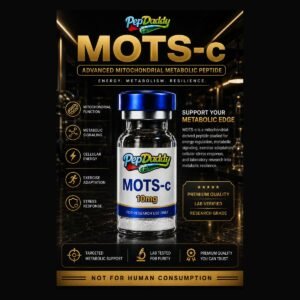
MOTS-c
10mgMitochondria-derived peptide research material used in metabolic flexibility and energy pathway studies.
- Original guide dosage
- Original guide range: 5-10 mg, 2-3x/week, or 1-5 mg daily microdose.
- Original frequency
- Morning or pre-workout in research-style guide context
- Original cycle
- 8 weeks
- Updated evidence review
- No validated human therapeutic dose established.
- New vs old dosage comparison
- No new dosage change added beyond the previous evidence review. Keep the original guide range visible and use the evidence section to explain uncertainty.
- Route / format
- Experimental SC in retail-vial context
- Frequency
- No validated frequency
- Cycle logic
- Any exercise-mimetic cycle is speculative
- Why this cycle label
- Mechanistic literature is interesting, but robust human dosing has not been standardized.
- How to read both ranges
- Kept as previous guide context. Updated evidence says no validated human therapeutic dose.
- Evidence level
- Mostly animal / mechanistic evidence
- Monitoring / safety notes
- Metabolic markers, product identity, study endpoint response. Human dose standardization and safety are not established.
- COA check
- Verify exact sequence and molecular data against COA.
- Storage
- Store according to product label, COA, and laboratory SOPs
Semax
10mgACTH analogue research material used in cognitive, neuroprotective, and focus pathway studies.
- Original guide dosage
- Original guide range: 300-1000 mcg daily.
- Original frequency
- 2-3 days/week or in cycles
- Original cycle
- 8 weeks on / 8 weeks off
- Updated evidence review
- Intranasal formulations 0.1% to 1% are documented regionally; no robust internationally standardized mg/day regimen retrieved.
- New vs old dosage comparison
- No new dosage change added beyond the previous evidence review. Keep the original guide range visible and use the evidence section to explain uncertainty.
- Route / format
- IN is the main evidence anchor
- Frequency
- Typically short daily courses in regional practice
- Cycle logic
- Short daily course; exact international standard lacking
- Why this cycle label
- Regional product form is intranasal, not fixed injectable self-dosing.
- How to read both ranges
- Kept as previous guide context. Updated evidence anchors regional intranasal formulations rather than fixed injectable mg/day.
- Evidence level
- Regional clinical use plus preclinical mechanism
- Monitoring / safety notes
- Focus, mood, sleep, headache, nasal irritation. Local irritation, headache, stimulation/sedation mismatch.
- COA check
- Verify analogue format and sequence against COA.
- Storage
- Store according to product label, COA, and laboratory SOPs
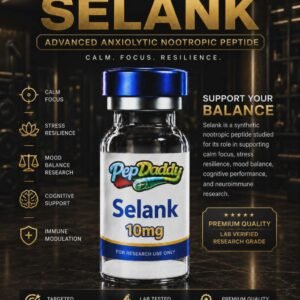
Selank
10mgTuftsin-derived peptide research material used in stress, mood, and cognitive pathway studies.
- Original guide dosage
- Original guide range: 250-500 mcg daily, up to 1000 mcg/day in divided research doses.
- Original frequency
- Daily or 5 days on / 2 days off
- Original cycle
- 10-30 days, repeat as needed
- Updated evidence review
- Main evidence anchor is 0.15% intranasal aqueous formulation; fixed injectable dosing is not standardized.
- New vs old dosage comparison
- No new dosage change added beyond the previous evidence review. Keep the original guide range visible and use the evidence section to explain uncertainty.
- Route / format
- IN
- Frequency
- Daily in regional short-course use
- Cycle logic
- Short daily course, often 10 to 30 days
- Why this cycle label
- Regional clinical use supports daily intranasal short courses more than intermittent weekly use.
- How to read both ranges
- Kept as previous guide context. Updated evidence supports daily short-course intranasal use more than intermittent dosing.
- Evidence level
- Regional clinical evidence; low to moderate
- Monitoring / safety notes
- Mood response, sleep quality, nasal tolerance. Usually mild; local irritation, headache, variable stimulation or sedation.
- COA check
- Verify exact sequence and molecular data against COA.
- Storage
- Store according to product label, COA, and laboratory SOPs
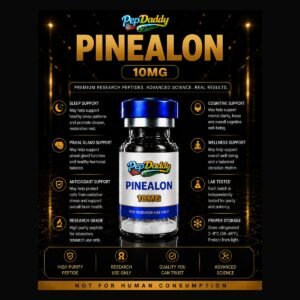
Pinealon
10mgShort neuropeptide research material used in neuronal protection and healthy ageing studies.
- Original guide dosage
- Original guide range: 1-3 mg daily.
- Original frequency
- Daily
- Original cycle
- 10-20 days
- Updated evidence review
- No globally validated human dose established.
- New vs old dosage comparison
- No new dosage change added beyond the previous evidence review. Keep the original guide range visible and use the evidence section to explain uncertainty.
- Route / format
- Usually IM or SC in marketed practice, not globally standardized
- Frequency
- Short-course use described regionally
- Cycle logic
- Short-course use described, evidence sparse
- Why this cycle label
- Regional literature does not establish an internationally standardized dose.
- How to read both ranges
- Kept as previous guide context. Updated evidence remains low and regionally based.
- Evidence level
- Low evidence; regional literature
- Monitoring / safety notes
- Study documentation, product identity, adverse reactions. Standardized human safety evidence limited.
- COA check
- Tripeptide Glu-Asp-Arg; verify against batch COA.
- Storage
- Store according to product label, COA, and laboratory SOPs
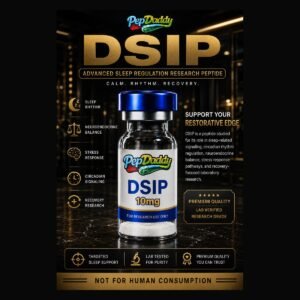
DSIP
10mgDelta Sleep-Inducing Peptide research material used in circadian and sleep architecture research.
- Original guide dosage
- Original guide range: 100-300 mcg before sleep.
- Original frequency
- 5 days on / 2 days off or as needed
- Original cycle
- 8 weeks
- Updated evidence review
- No validated human dose established.
- New vs old dosage comparison
- No new dosage change added beyond the previous evidence review. Keep the original guide range visible and use the evidence section to explain uncertainty.
- Route / format
- IV, IM, IN, or SC described historically, but not standardized
- Frequency
- No reliable standard
- Cycle logic
- No reliable cycle standard
- Why this cycle label
- Literature is contradictory and receptor biology remains unsettled.
- How to read both ranges
- Kept as previous guide context. Updated evidence says no reliable validated human dose or cycle.
- Evidence level
- Very low evidence; contradictory literature
- Monitoring / safety notes
- Sleep quality markers, next-day sedation, product identity. Dose and safety standardization are not established.
- COA check
- Nonapeptide reference material; verify exact sequence and COA.
- Storage
- Store according to product label, COA, and laboratory SOPs
Melanotan I
10mgMelanocortin analogue research material used in pigmentation and UV-response pathway studies.
- Original guide dosage
- Original guide range: 250-1000 mcg daily.
- Original frequency
- Daily loading, then maintenance as needed
- Original cycle
- Variable until target research endpoint achieved
- Updated evidence review
- Best-supported molecular regimen is afamelanotide 16 mg subcutaneous implant every 2 months; this does not validate reconstituted cosmetic self-injection vials.
- New vs old dosage comparison
- No new dosage change added beyond the previous evidence review. Keep the original guide range visible and use the evidence section to explain uncertainty.
- Route / format
- Subcutaneous implant in approved use
- Frequency
- Every 2 months in approved product regimen
- Cycle logic
- Scheduled implant therapy in approved use; cosmetic injection equivalence is not established
- Why this cycle label
- Evidence is for HCP-administered implant, not reconstituted self-injection.
- How to read both ranges
- Kept as previous guide context. Updated evidence distinguishes afamelanotide implant evidence from reconstituted vial use.
- Evidence level
- Approved product evidence for afamelanotide only
- Monitoring / safety notes
- Periodic skin examination, nevus changes, pigmentation response. Nausea, headache, implant-site effects, darkening of existing nevi.
- COA check
- Verify exact analogue identity and COA.
- Storage
- Store according to product label, COA, and laboratory SOPs
Melanotan II
10mgMelanocortin agonist research material used in pigmentation pathway studies.
- Original guide dosage
- Original guide range: 100-500 mcg daily until target pigmentation endpoint.
- Original frequency
- Daily loading, then 1-2x/week maintenance
- Original cycle
- Variable until target achieved
- Updated evidence review
- No validated cosmetic self-injection dose.
- New vs old dosage comparison
- No new dosage change added beyond the previous evidence review. Keep the original guide range visible and use the evidence section to explain uncertainty.
- Route / format
- SC in unlicensed cosmetic use, not an endorsed regimen
- Frequency
- No validated frequency
- Cycle logic
- No endorsed cosmetic cycle
- Why this cycle label
- Safety concerns and lack of validation mean grey-market practice should not be converted into recommendation.
- How to read both ranges
- Kept as previous guide context. Updated evidence says there is no validated cosmetic self-injection dose and safety concerns are substantial.
- Evidence level
- Unlicensed / unapproved use with safety concerns
- Monitoring / safety notes
- Skin changes, mole darkening, nausea, flushing, adverse reactions. Nausea, flushing, yawning, mole darkening, and concern around serious adverse events.
- COA check
- Verify exact analogue identity and COA.
- Storage
- Store according to product label, COA, and laboratory SOPs
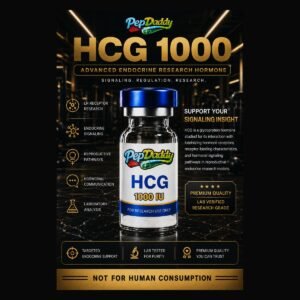
HCG
1000 IUIU-based hormone pathway research material used in LH-like signalling and fertility models.
- Original guide dosage
- Original guide range: 250-500 IU 2-3x/week or 1000-2000 IU weekly depending research context.
- Original frequency
- 2-3x/week or indication-specific schedule
- Original cycle
- Varies widely by protocol
- Updated evidence review
- Indication-specific IU dosing; cannot be collapsed into one universal range.
- New vs old dosage comparison
- No new dosage change added beyond the previous evidence review. Keep the original guide range visible and use the evidence section to explain uncertainty.
- Route / format
- IM or SC depending protocol
- Frequency
- Repeated medical dosing with lab follow-up
- Cycle logic
- Not a simple short cycle; indication-specific regimen only
- Why this cycle label
- Male hypogonadotropic hypogonadism, fertility, and TRT fertility preservation use different schedules.
- How to read both ranges
- Kept as previous guide context. Updated evidence says HCG dosing is indication-specific and should not be collapsed into one universal range.
- Evidence level
- Approved hormone class, but exact regimen requires indication-specific label/guideline confirmation
- Monitoring / safety notes
- Hormones, fertility markers, clinical indication, lab follow-up. Hormonal adverse effects and lab-monitoring requirements.
- COA check
- IU-based item. This mg/mL calculator should not be used unless documentation supplies a mass-based conversion.
- Storage
- Store according to product label, COA, and laboratory SOPs
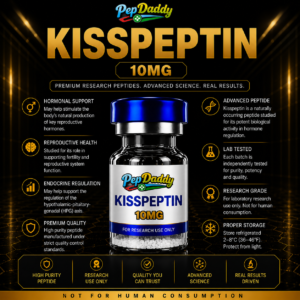
Kisspeptin
10mgNeuropeptide research material used in HPG axis, LH, and FSH signalling studies.
- Original guide dosage
- Original guide range: 100-200 mcg, 2-3x/week.
- Original frequency
- 2-3x/week
- Original cycle
- 30 days on / off or adjunct research use
- Updated evidence review
- Early human work uses single IV infusion or bolus kisspeptin-54; no validated retail-vial SC regimen.
- New vs old dosage comparison
- No new dosage change added beyond the previous evidence review. Keep the original guide range visible and use the evidence section to explain uncertainty.
- Route / format
- IV most studied
- Frequency
- Acute or short experimental exposure
- Cycle logic
- Chronic self-cycling not validated
- Why this cycle label
- Human physiology studies do not translate into a retail-vial protocol.
- How to read both ranges
- Kept as previous guide context. Updated evidence anchors early human IV physiology studies, not validated retail-vial SC cycling.
- Evidence level
- Human physiology / early clinical work
- Monitoring / safety notes
- LH, FSH, sex hormones, indication-specific endocrine response. Hormonal effects and lack of chronic retail protocol validation.
- COA check
- Verify exact kisspeptin fragment against COA.
- Storage
- Store according to product label, COA, and laboratory SOPs
5-AMINO-1MQ
50mgNNMT inhibitor research compound used in metabolic efficiency and body composition studies.
- Original guide dosage
- Original guide range: 50-100 mg daily.
- Original frequency
- Daily
- Original cycle
- 4-8 weeks
- Updated evidence review
- No validated human dose established in this review.
- New vs old dosage comparison
- No new dosage change added beyond the previous evidence review. Keep the original guide range visible and use the evidence section to explain uncertainty.
- Route / format
- Human therapeutic route not established
- Frequency
- No validated frequency
- Cycle logic
- No validated cycle
- Why this cycle label
- Source gap remains; follow-up primary evidence needed before confident dosing language.
- How to read both ranges
- Kept as previous guide context. Updated evidence says no validated human dose established in this review.
- Evidence level
- Source gap in this pass; follow-up needed
- Monitoring / safety notes
- Metabolic study endpoints and product identity. Human dosing and safety standardization not established.
- COA check
- Small molecule research compound; verify CAS, formula, and molecular weight against COA.
- Storage
- Store according to product label, COA, and laboratory SOPs
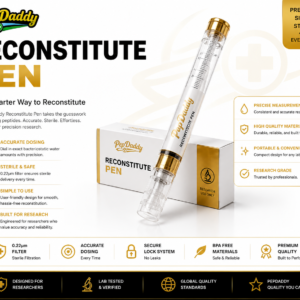
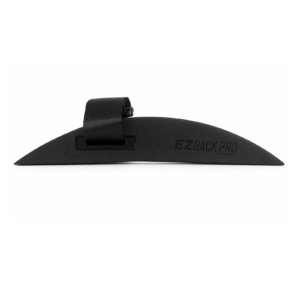
Reconstitution Pen
AccessoryPrecision measuring accessory for laboratory preparation workflows.
- Original guide dosage
- Not applicable.
- Original frequency
- As required for research preparation workflow
- Original cycle
- Not applicable
- Updated evidence review
- Not applicable.
- New vs old dosage comparison
- No new dosage change added beyond the previous evidence review. Keep the original guide range visible and use the evidence section to explain uncertainty.
- Route / format
- Not applicable
- Frequency
- Not applicable
- Cycle logic
- Not applicable
- Why this cycle label
- Accessory only. Focus is aseptic handling and accurate reconstitution.
- How to read both ranges
- Accessory only. Focus remains accurate reconstitution, sterile handling, labeling, and storage.
- Evidence level
- Accessory / handling only
- Monitoring / safety notes
- Correct diluent, correct volume, labeling, storage, sterility, and documentation. Main risk is contamination or inaccurate reconstitution.
- COA check
- Accessory only. Not a peptide compound and not used for concentration calculation.
- Storage
- Store according to product label, COA, and laboratory SOPs
Research Findings
Comprehensive HPLC analysis and peptide characterization for all materials.
Peptide Classification & Testing Analysis
All PepDaddy research materials undergo rigorous laboratory testing with detailed batch documentation.
Fast Melbourne Delivery
PepDaddy serves 35+ Melbourne suburbs with compliant research peptide delivery.
- ✔ 2-3 business day delivery
- ✔ Express options available
- ✔ Full compliance documentation
- ✔ Location-specific service zones
Serving Suburbs:
Popular Peptide Stacks
Pre-curated combinations designed for synergistic research applications.
Fat Loss Stack
Metabolic optimization with proven synergistic mechanisms.
CJC-DAC AOD-9604 MOTS-CView Details →
Muscle Growth Stack
Protein synthesis and tissue development research combination.
CJC-Ipamorelin Tesamorelin GHK-CuView Details →
Recovery Stack
Tissue regeneration and recovery pathway research.
BPC-157 Epitalon GHK-CuView Details →
Anti-Aging Stack
Longevity and cellular optimization research combination.
Epitalon SS-31 NAD+View Details →
Ready to Order Premium Research Materials?
Browse our complete catalog of lab-verified research peptides with fast Melbourne delivery and full compliance documentation.